AI Websites

AI Websites

AI can build your website, but it still can’t make it convert

A practical breakdown of why AI website builders struggle with conversion, and what still requires human strategy, structure, and UX thinking to turn traffic into action.
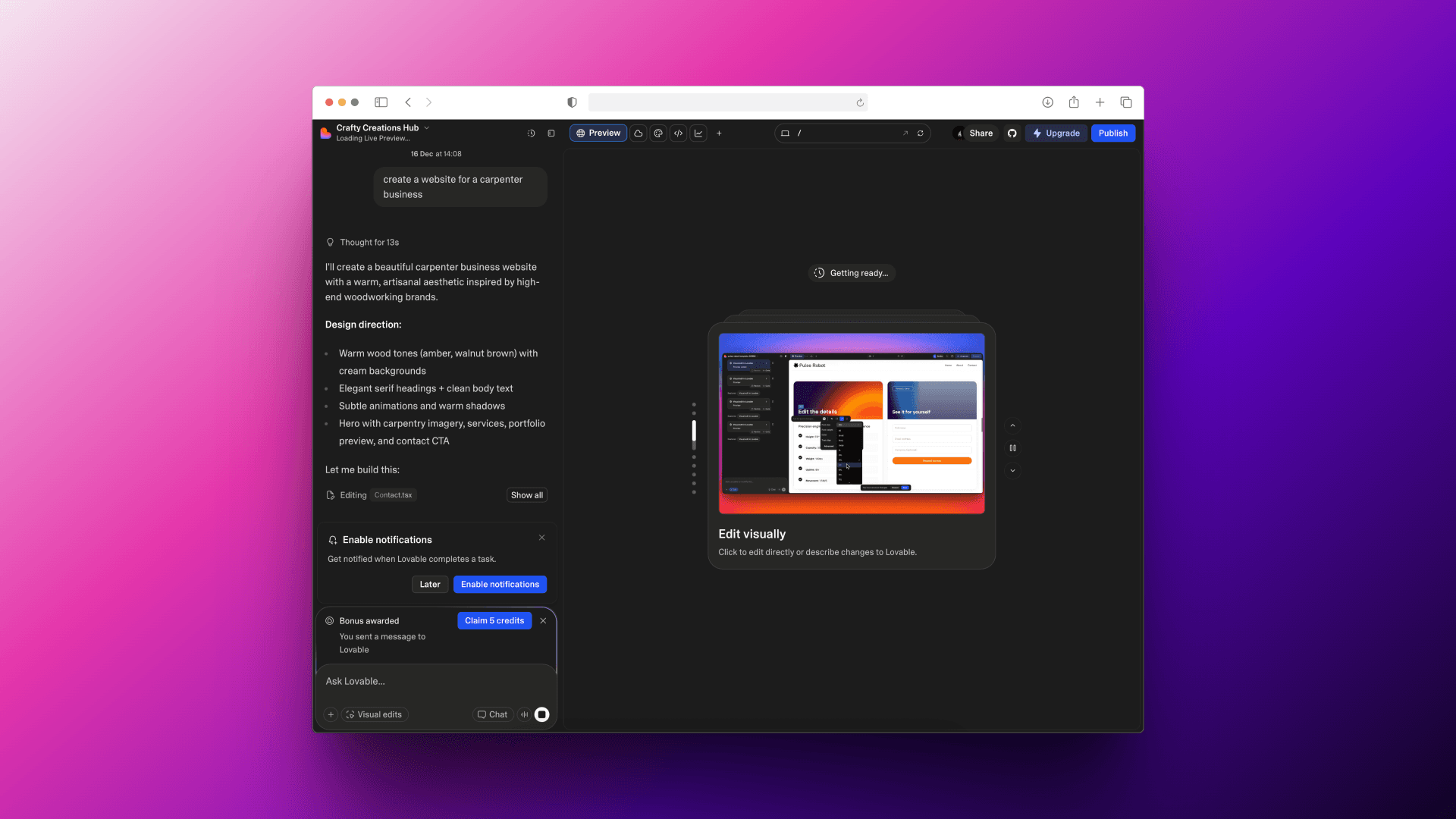
AI website builder interface generating a business website layout from a prompt, showing automated design and content creation in progress.

AI Can Build Pages, Not Strategy

AI website builders have lowered the barrier to launching a site. With a few prompts, you can generate layouts, sections, copy, and even basic interactions in minutes. Speed is the win.

But speed alone does not equal performance.

Most AI-generated websites fail at the same point: they look complete, but they do not guide users toward a clear outcome. Messaging is generic, hierarchy is flat, and calls to action compete instead of convert. The result is a site that exists, but does not work.

AI is excellent at assembling components. It still struggles with intent.

Conversion requires understanding audience psychology, decision friction, and context. These are not visual problems. They are strategic ones.

Why Most AI-Built Websites Don’t Convert

AI builders generate what looks correct on the surface, but they miss the deeper structure that makes a website effective.

Here is where things usually break:

  • Unclear value proposition: Headlines describe features, not outcomes. Visitors cannot quickly understand why they should care.

  • Weak content hierarchy: Everything feels equally important, so nothing stands out. Users scan, then leave.

  • Generic calls to action: Buttons like “Get started” or “Learn more” appear everywhere without intent or urgency.

  • No audience specificity: AI writes for everyone, which means it persuades no one.

A converting website is not about having more sections. It is about making fewer, better decisions.
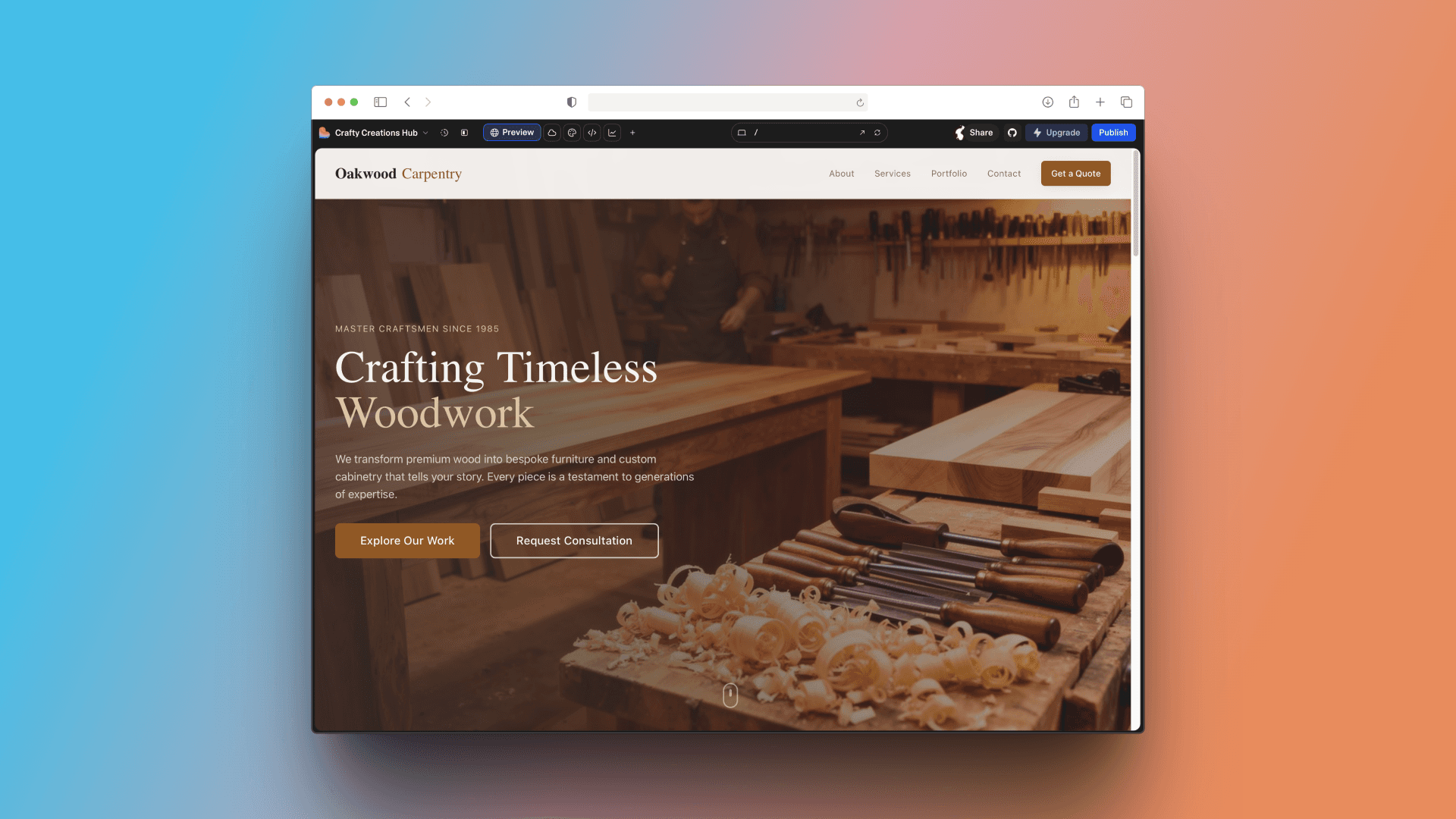

AI-generated business website landing page with polished visuals and layout, illustrating the difference between visual design and conversion-focused structure.

Structure Is What Turns Traffic Into Action

High-performing landing pages follow patterns for a reason. They reduce friction, answer objections early, and lead users step by step toward a decision.

Conversion-focused structure includes:

  • A single, clear goal per page.

  • Strong above-the-fold messaging that answers “What is this and who is it for?”.

  • Logical flow from problem to solution to proof.

  • Intentional spacing, contrast, and pacing to guide attention.

AI tools can assist with layout generation, but they do not understand priority. Structure is still a human responsibility.

This is where most AI websites fall short.

Where AI Fits Best in the Build Process

AI is not the enemy of good websites. Used correctly, it is a powerful accelerator.

AI works best when it supports an existing strategy, not when it replaces one.

Strong use cases include:

  • Rapid wireframe exploration.

  • Drafting early copy for iteration.

  • Generating layout variations for testing.

  • Speeding up first versions.

The mistake is letting AI define the strategy instead of executing it.

When humans define the framework and AI supports production, results improve dramatically.

The Difference Between “Built” and “Designed”

  • A built website is assembled.

  • A designed website is intentional.

Conversion happens when messaging, structure, visuals, and performance work together toward a specific outcome. That alignment does not come from prompts alone. It comes from understanding goals, users, and trade-offs.

AI can help you launch faster. It cannot decide what matters most.

That decision still belongs to experienced designers who understand how people think, scroll, and choose.

So, Can AI Replace Web Designers?

AI will continue to improve, and website builders will get faster, smarter, and more accessible. But conversion is not a tooling problem. It is a thinking problem.

The brands that win will not be the ones who generate the fastest sites. They will be the ones who combine strategy, structure, and execution, using AI as a tool, not a shortcut.

That gap between “looks good” and “actually converts” is where real design still lives.

Structure Is What Turns Traffic Into Action

High-performing landing pages follow patterns for a reason. They reduce friction, answer objections early, and lead users step by step toward a decision.

Conversion-focused structure includes:

  • A single, clear goal per page.

  • Strong above-the-fold messaging that answers “What is this and who is it for?”.

  • Logical flow from problem to solution to proof.

  • Intentional spacing, contrast, and pacing to guide attention.

AI tools can assist with layout generation, but they do not understand priority. Structure is still a human responsibility.

This is where most AI websites fall short.

Where AI Fits Best in the Build Process

AI is not the enemy of good websites. Used correctly, it is a powerful accelerator.

AI works best when it supports an existing strategy, not when it replaces one.

Strong use cases include:

  • Rapid wireframe exploration.

  • Drafting early copy for iteration.

  • Generating layout variations for testing.

  • Speeding up first versions.

The mistake is letting AI define the strategy instead of executing it.

When humans define the framework and AI supports production, results improve dramatically.

The Difference Between “Built” and “Designed”

  • A built website is assembled.

  • A designed website is intentional.

Conversion happens when messaging, structure, visuals, and performance work together toward a specific outcome. That alignment does not come from prompts alone. It comes from understanding goals, users, and trade-offs.

AI can help you launch faster. It cannot decide what matters most.

That decision still belongs to experienced designers who understand how people think, scroll, and choose.

So, Can AI Replace Web Designers?

AI will continue to improve, and website builders will get faster, smarter, and more accessible. But conversion is not a tooling problem. It is a thinking problem.

The brands that win will not be the ones who generate the fastest sites. They will be the ones who combine strategy, structure, and execution, using AI as a tool, not a shortcut.

That gap between “looks good” and “actually converts” is where real design still lives.

Structure Is What Turns Traffic Into Action

High-performing landing pages follow patterns for a reason. They reduce friction, answer objections early, and lead users step by step toward a decision.

Conversion-focused structure includes:

  • A single, clear goal per page.

  • Strong above-the-fold messaging that answers “What is this and who is it for?”.

  • Logical flow from problem to solution to proof.

  • Intentional spacing, contrast, and pacing to guide attention.

AI tools can assist with layout generation, but they do not understand priority. Structure is still a human responsibility.

This is where most AI websites fall short.

Where AI Fits Best in the Build Process

AI is not the enemy of good websites. Used correctly, it is a powerful accelerator.

AI works best when it supports an existing strategy, not when it replaces one.

Strong use cases include:

  • Rapid wireframe exploration.

  • Drafting early copy for iteration.

  • Generating layout variations for testing.

  • Speeding up first versions.

The mistake is letting AI define the strategy instead of executing it.

When humans define the framework and AI supports production, results improve dramatically.

The Difference Between “Built” and “Designed”

  • A built website is assembled.

  • A designed website is intentional.

Conversion happens when messaging, structure, visuals, and performance work together toward a specific outcome. That alignment does not come from prompts alone. It comes from understanding goals, users, and trade-offs.

AI can help you launch faster. It cannot decide what matters most.

That decision still belongs to experienced designers who understand how people think, scroll, and choose.

So, Can AI Replace Web Designers?

AI will continue to improve, and website builders will get faster, smarter, and more accessible. But conversion is not a tooling problem. It is a thinking problem.

The brands that win will not be the ones who generate the fastest sites. They will be the ones who combine strategy, structure, and execution, using AI as a tool, not a shortcut.

That gap between “looks good” and “actually converts” is where real design still lives.

Next blog

Next blog

Next blog

Take a deeper dive and browse through more of our posts

Explore our extensive collection of posts for in-depth insights and valuable information.

Explore our extensive collection of posts for in-depth insights and valuable information.

Explore our extensive collection of posts for in-depth insights and valuable information.